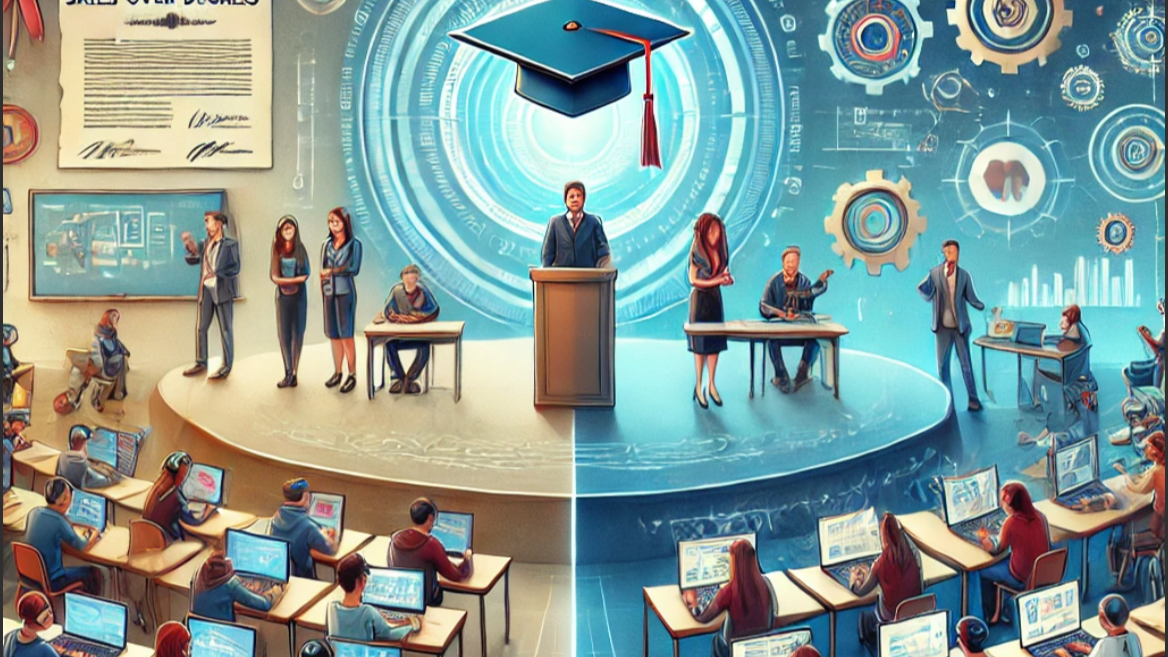
There’s a quiet shift happening in education. Not loud, not flashy—but meaningful. For years, learning was measured in marks, attendance sheets, and maybe the occasional teacher’s comment scribbled in red ink. But anyone who’s spent time in a classroom knows that learning is messier than that. It’s about attention, curiosity, habits, even mood on a given day.
Now, technology is trying to capture those in-between moments.
Beyond Marks and Report Cards
Traditional evaluation systems are… limited. They tell you what a student scored, but rarely why. Was the student distracted? Confused? Overconfident? We often guess, sometimes correctly, often not.
AI-based behavior tracking tools aim to fill that gap.
Using cameras, sensors, or even simple software logs, these systems track patterns—how long a student focuses on a task, how frequently they participate, when they lose attention, and sometimes even facial expressions. It sounds a bit futuristic, maybe even uncomfortable at first glance.
Related storyBetween Screens and Classrooms: What Hybrid Learning Is Really Doing to Students
But the intention, at least in theory, is to understand learning at a deeper level.
What Exactly Is Being Tracked?
It’s not just about watching students. That would be… unsettling.
Instead, these systems look for behavioral signals. Things like:
- Time spent actively engaging with learning material
- Frequency of asking or answering questions
- Patterns of distraction or inactivity
- Interaction levels during group tasks
Some advanced setups even analyze tone of voice or posture. Though, to be fair, those are still evolving and not always reliable.
The idea is to build a profile—not of the student’s personality, but of their learning habits.
Related storyDegrees, Certificates, and the Quiet Shift in How We Learn
Where It Actually Helps
Let’s say a student consistently zones out during math classes but stays engaged during science. Earlier, this might go unnoticed unless the teacher is exceptionally observant.
With AI tracking, those patterns become visible.
Teachers can then adjust their approach—maybe change teaching style, introduce interactive elements, or simply check in with the student. It’s not about labeling someone as “weak” or “strong,” but understanding how they learn best.
And when people ask, AI-based student behavior tracking se learning outcomes kaise improve ho rahe hain?, this is where the answer starts to make sense. It’s less about control, more about insight.
Related storyCan You Reprogram Your Biology? Nirmal Kumar Breaks Down Epigenetics
The Teacher’s Role Isn’t Replaced
There’s a common fear that AI will take over classrooms. But that’s not really what’s happening here.
If anything, these tools rely heavily on teachers to interpret the data.
A system might flag that a student is distracted 40% of the time. But it takes a human to ask—why? Is the content too easy? Too hard? Is something happening outside school?
AI provides signals. Teachers provide context.
And honestly, that balance is crucial. Without it, the data becomes just numbers on a screen.
The Privacy Question (It’s Real)
We can’t ignore this part.
Tracking behavior—especially in young students—raises valid concerns. Parents worry about surveillance. Students might feel watched. Schools have to think carefully about data storage, consent, and ethical use.
Not every implementation gets this right.
There’s a thin line between helpful monitoring and invasive tracking. And crossing it, even unintentionally, can erode trust quickly.
So while the technology is promising, it needs guardrails. Clear policies. Transparency. Maybe even limits on what should not be tracked.
Not a Magic Fix
It’s tempting to think that adding AI to classrooms will suddenly solve all learning problems. It won’t.
Students are still human. They get bored, distracted, stressed. No algorithm can fully capture that complexity.
Sometimes, a student struggles not because of classroom behavior, but because of things happening at home. Or because they’re just having an off day.
AI can highlight patterns, but it can’t replace empathy.
A Subtle Shift in How We Think About Learning
What’s interesting, though, is the mindset change this brings.
Instead of asking, “Did the student score well?” we start asking, “How did the student learn?” That’s a more nuanced question. And probably a more useful one in the long run.
It shifts the focus from outcomes to processes.
And once you start looking at learning that way, small improvements—better focus, more participation, consistent effort—begin to matter just as much as final grades.
Final Thoughts
AI-based behavior tracking in education sits in a slightly uncomfortable space. It’s helpful, but not flawless. Insightful, but sometimes intrusive. Promising, yet still figuring itself out.
And maybe that’s okay.
Because the goal isn’t perfection—it’s progress.
If used thoughtfully, these tools can help teachers notice what often goes unnoticed. They can support students in ways that feel more personalized, less generic. But they need to be handled with care, with awareness, and with a strong human touch.
At the end of the day, learning is still a deeply human experience.
Technology can guide it. It can enhance it.
But it shouldn’t define it.