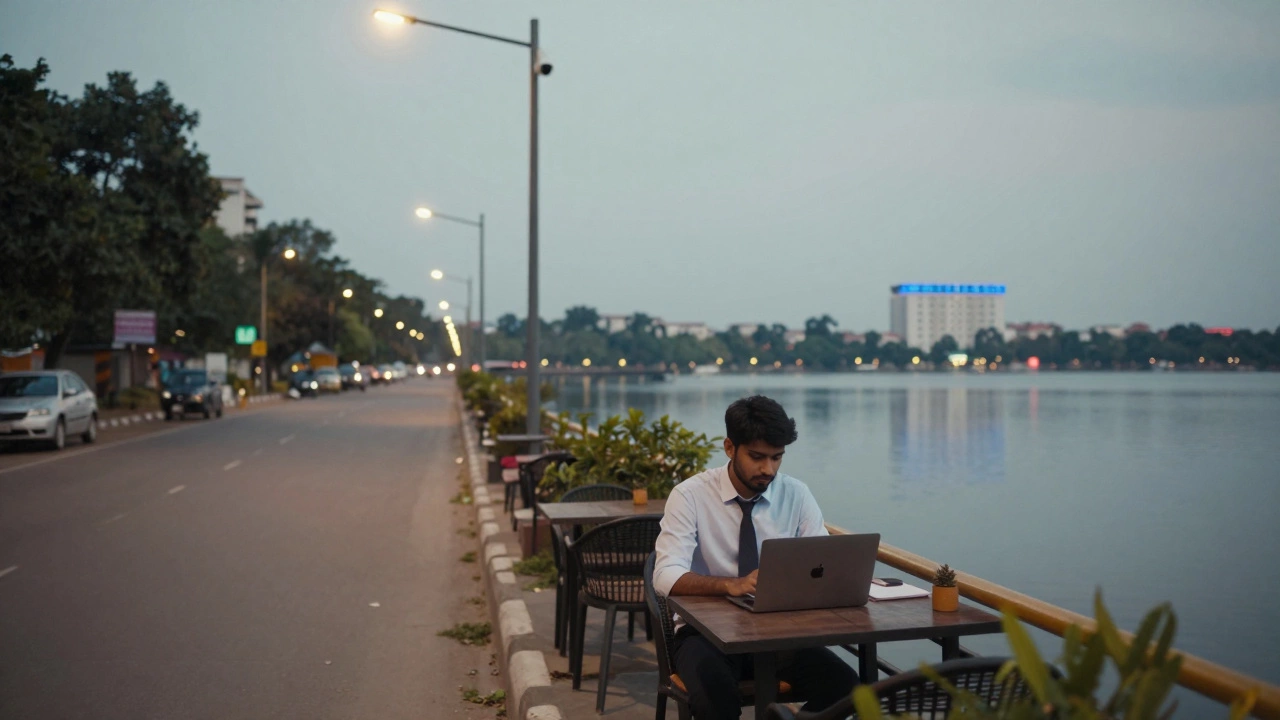
There’s something oddly poetic about it. A laptop open on a balcony overlooking the hills, coffee going cold because a Zoom call ran longer than expected, and the line between “vacation” and “workday” slowly dissolving.
What used to be a short escape from routine has started turning into something else entirely—semi-permanent stays, flexible living, and homes that are no longer just “holiday homes” in the traditional sense.
Remote work didn’t just change where people work. It changed where people live, even if temporarily.
Related storyCo-Living in India’s Tier-2 Cities: A Quiet Lifestyle Shift That’s Picking Up Pace
The New Meaning of “Getting Away”
Earlier, a holiday home meant a place you visited for a few days, maybe a couple of weeks a year. It was indulgent, occasional, almost ceremonial.
Now, things feel different.
With work-from-anywhere becoming more normalized, people aren’t just escaping to these homes—they’re staying longer. A week turns into a month. A month turns into a “why not stay till next quarter?”
And honestly, why not?
If your meetings are on Zoom and your deadlines are digital, location starts to feel… optional.
Related storyWhen Algorithms Start Pricing Homes: The Quiet Rise of AI in Real Estate Valuation
Remote Work Changed the Geography of Living
One of the biggest shifts we’ve seen in the last few years is how people think about location. Cities still matter, of course, but they’re no longer the only option.
Hill stations, coastal towns, quieter outskirts of metros—all these places are suddenly in demand, not just for holidays but for living and working.
And this is where things get interesting for the real estate market.
Holiday homes are no longer just luxury purchases. They’re becoming hybrid spaces—part home, part office, part retreat.
The Demand Curve Is Moving
Developers and property investors have started noticing a pattern. Properties that were once marketed as weekend getaways are now being pitched as “work-friendly retreats” or “remote living spaces.”
This shift isn’t subtle anymore—it’s shaping pricing, design, and even location strategy.
Work-from-anywhere trend ka holiday homes market par kya effect hai? The effect is quite visible: demand has expanded beyond short-term vacation buyers to include long-term remote workers who want comfort, connectivity, and lifestyle in one place.
That means better internet infrastructure is now as important as a scenic view. Maybe even more.
What Buyers Are Actually Looking For
It’s not just about aesthetics anymore. A beautiful villa by the hills is great, but if the Wi-Fi drops every ten minutes, it loses its appeal fast.
Modern buyers want functionality disguised as comfort.
Reliable internet, quiet workspaces, backup power, good road connectivity—these are becoming non-negotiables.
At the same time, people still want the “holiday feel.” Nature views, open balconies, fresh air. So developers are trying to strike a balance between productivity and relaxation.
It’s a strange but fascinating design challenge.
The Rise of “Workation” Culture
If there’s one buzzword that captures this shift, it’s “workation.” A mix of work and vacation that doesn’t really separate the two.
People check emails in the morning, take breaks in nature, join meetings in the afternoon, and maybe end the day with a walk instead of a commute.
This lifestyle has created a new kind of buyer—someone who doesn’t want to choose between career and comfort.
And holiday homes are adapting to that mindset.
Impact on Traditional Holiday Home Owners
Not everyone is benefiting equally, though.
Traditional holiday home owners—those who bought properties purely for occasional use—are now seeing a change in market dynamics. Demand patterns are different. Rentals are longer but more utility-driven. Expectations are higher.
It’s no longer enough to just offer a scenic escape. The property has to function like a full-time living space.
This shift is forcing owners to upgrade, rethink, or reposition their properties entirely.
Location Is No Longer the Only Selling Point
Earlier, the value of a holiday home depended heavily on location. Goa, Manali, Coorg—names alone carried weight.
Now, while location still matters, it’s no longer the only factor.
Connectivity has entered the equation in a big way. A slightly less scenic place with great infrastructure can sometimes outperform a beautiful but disconnected destination.
That’s a quiet but powerful change in how value is being defined.
A Blurring of Lifestyle Categories
What’s really happening here is a blending of categories that used to be separate.
Home, office, vacation spot—they’re merging into one flexible lifestyle ecosystem.
People are no longer living in fixed roles or fixed spaces. They’re moving between them, sometimes without even changing addresses.
And holiday homes are sitting right in the middle of that transition.
So, Where Is This Heading?
It’s hard to say with certainty, but the direction feels clear.
We’re moving toward a world where properties are designed for adaptability. Where a home isn’t labeled strictly as “primary” or “holiday,” but something in between.
Developers who understand this shift early are likely to shape the next phase of real estate in a meaningful way.
Final Thoughts
The work-from-anywhere lifestyle didn’t just change office culture—it quietly reshaped how we think about space, ownership, and even leisure.
Holiday homes are no longer just escapes. They’re becoming extensions of daily life, shaped by Wi-Fi signals, Zoom calls, and the desire for a slower backdrop to a fast-moving world.
And maybe that’s the real shift here—not just where we go when we want to relax, but where we choose to build our everyday lives when work stops being tied to one place.