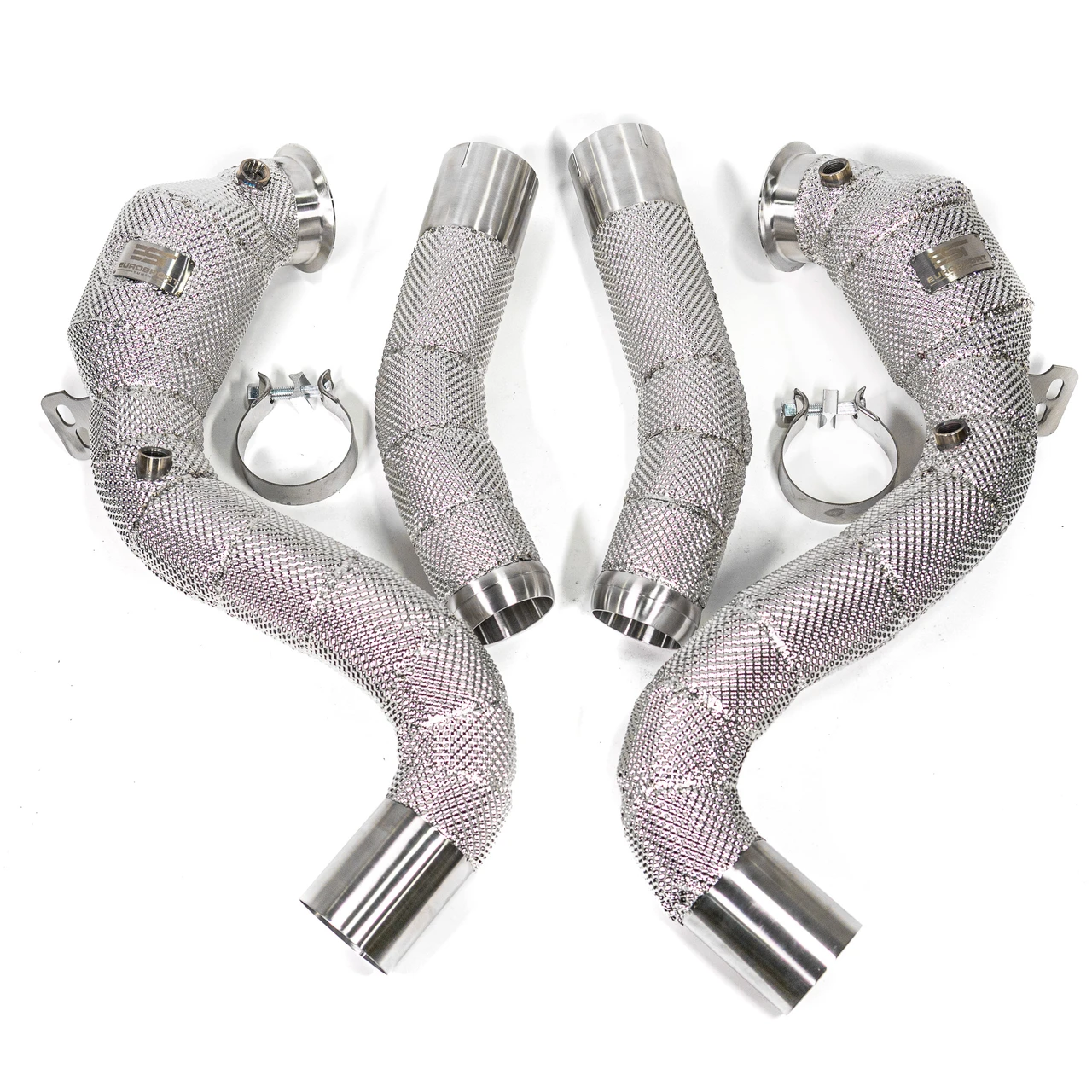
Mercedes-AMG vehicles are known for combining luxury, advanced engineering, and thrilling performance. For many enthusiasts, however, the factory exhaust system is only the beginning. Performance upgrades such as downpipes are often considered by drivers who want to change exhaust flow, enhance the engine’s character, and create a more aggressive sound.
From the powerful C63 W205 to the compact A45S and the exotic AMG GT, GTR, and GTS models, each platform has its own engineering requirements. Choosing the right downpipe involves more than selecting a product based on sound alone. Proper fitment, build quality, installation requirements, electronic compatibility, and local regulations all deserve careful attention.
Understanding Performance Downpipes
A downpipe is an important part of a turbocharged exhaust system. Located close to the turbocharger, it directs exhaust gases toward the remaining sections of the exhaust. Factory components are designed to balance performance with emissions standards, noise control, reliability, and long-term durability.
Related storyMercedes Performance Downpipes: C63 W205, A45S, and AMG GT GTR GTS
Aftermarket systems may use a less restrictive design, which can change exhaust flow and sound characteristics. The overall result depends on the vehicle, supporting modifications, engine calibration, and the quality of the installed components. For this reason, a carefully planned setup is generally more effective than simply replacing one part without considering the rest of the vehicle.
Mercedes C63 W205 Downpipe Options
The Mercedes-AMG C63 W205 is a popular choice among performance enthusiasts thanks to its powerful V8 engine and distinctive AMG personality. Owners looking to modify the exhaust system often compare mercedes c63 w205 catted and catless downpipes based on their performance goals, sound preferences, and intended vehicle use.
Catted systems include catalytic converters, while catless versions remove them. This difference can affect exhaust sound, emissions, diagnostics, and legal road use. Depending on local laws, modifying or removing emissions-control equipment may not be permitted on public roads.
Before selecting either option, owners should verify compatibility with their exact model and understand whether additional calibration or supporting modifications may be required.
Mercedes A45S Decat Downpipe Considerations
The Mercedes-AMG A45S delivers impressive performance from a compact turbocharged platform. Its combination of advanced technology and strong acceleration has made it a popular vehicle for carefully planned aftermarket modifications.
A mercedes a45s decat downpipe can significantly alter the exhaust system, but owners should understand the potential consequences before installation. A decat configuration may affect emissions compliance, vehicle diagnostics, exhaust noise, and road legality. In many regions, removing emissions-related components is restricted or prohibited for public-road vehicles.
For this reason, it is important to research local regulations and work with an experienced automotive specialist. Professional advice can help owners understand installation requirements and potential effects on the overall vehicle setup.
Mercedes-AMG GT, GTR and GTS Performance Builds
The Mercedes-AMG GT family offers a more focused performance experience, with models such as the GT, GTR, and GTS attracting drivers who appreciate track-inspired engineering. Their powerful turbocharged engines provide a strong foundation for exhaust modifications.
The mercedes amg gt gtr gts downpipes market includes options designed for different performance goals and vehicle configurations. Precise fitment is essential because these models have tightly packaged engine and exhaust systems. A poorly designed component can create issues such as leaks, vibrations, heat-related problems, or interference with nearby parts.
High-quality materials and accurate manufacturing are especially important because exhaust components operate under extreme temperatures and repeated thermal cycles.
Choosing Quality and Proper Fitment
When comparing aftermarket downpipes, buyers should look beyond basic performance claims. Material quality, weld strength, heat resistance, fitment accuracy, and compatibility with sensors are all important factors.
Modern Mercedes-AMG vehicles use sophisticated engine-management systems, so exhaust modifications can sometimes affect diagnostic monitoring or require professional calibration. Experienced installers can help ensure that connections, heat shields, sensors, and surrounding components are handled correctly.
A complete inspection after installation is also valuable. Checking for leaks, alignment problems, or unwanted vibration can help protect the long-term reliability of the exhaust system.
Emissions and Road-Use Regulations
Before modifying any exhaust system, vehicle owners should review applicable emissions and road-use laws. Components designed for track or off-road applications may not be approved for public-road use. Modifications can also affect warranty coverage or vehicle inspections.
Understanding these requirements before purchasing parts can prevent unnecessary expense and future complications.
Final Thoughts
Downpipe upgrades can be an interesting way to personalize the performance and sound of a Mercedes-AMG. Whether the project involves a C63 W205, A45S, AMG GT, GTR, or GTS, the best results usually come from careful planning and quality components.
Prioritize exact vehicle compatibility, professional installation, and compliance with applicable laws. A well-engineered exhaust upgrade can complement a complete performance build while maintaining the reliability and sophistication expected from a high-performance Mercedes-AMG.
