There’s something oddly emotional about milk. It’s one of those everyday things people rarely question—until suddenly they have to. A glass of milk in the morning, tea with milk in the evening, sweets at festivals… it sits quietly in the background of daily life. But now, something unusual is entering the scene: dairy that doesn’t come from animals at all.
Lab-grown dairy is not just a lab experiment anymore. It’s slowly stepping into conversations about food security, sustainability, and even ethics. And while it still sounds futuristic to many, the shift is already underway in small but meaningful ways.
A New Kind of Dairy Story
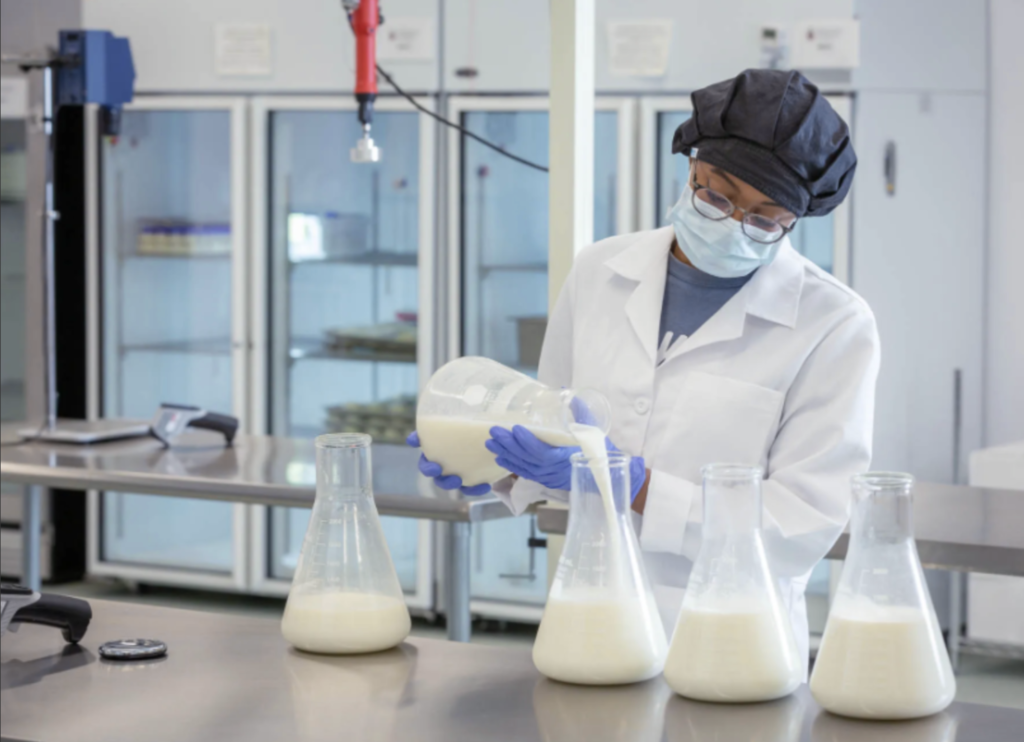
At its core, lab-grown dairy is produced using fermentation technology or cultured cells that replicate the proteins found in milk. No cows involved in the traditional sense. No large-scale dairy farms. Just science trying to recreate what nature has been doing for thousands of years.
Related storyCooking Without Waste: The Quiet Shift Happening in Modern Home Kitchens
What’s interesting is how familiar the end product aims to be. The goal isn’t to reinvent milk—it’s to replicate it so closely that most people won’t notice the difference in taste, texture, or usability. That alone makes it a disruptive idea, even if adoption is still in its early stages.
Why This Idea Is Gaining Attention
There are a few reasons this space is suddenly getting serious attention. Climate concerns are one of them. Traditional dairy farming requires land, water, and feed—lots of it. Add methane emissions from livestock, and the environmental footprint becomes hard to ignore.
Then there’s scalability. As global populations grow and demand for protein increases, traditional systems might struggle to keep up without putting more pressure on natural resources. Lab-based alternatives promise consistency without depending on weather, geography, or animal health.
Related storyFrom Coffee to Calm: The Strange New World of Functional Beverages
And of course, there’s ethics. Some consumers are simply looking for alternatives that don’t involve animal farming at all. That demand, even if niche right now, is growing steadily in urban markets.
The Turning Point for Traditional Dairy
This is where things start to feel a bit uncomfortable for the existing dairy ecosystem. Not in an immediate collapse kind of way, but more like a slow reshaping of demand patterns.
Lab-grown dairy products ka future traditional milk industry ko kaise impact karega? That question is no longer theoretical. It’s something farmers, food companies, and policymakers are beginning to quietly consider.
The most likely scenario isn’t replacement—it’s coexistence. Traditional dairy will still dominate for a long time, especially in regions where farming is deeply embedded in culture and economy. But lab-grown alternatives could gradually take a share of processed foods, beverages, and industrial dairy usage.
Think ice creams, protein shakes, bakery ingredients—products where milk is an input rather than the headline.
The Price Problem and Consumer Mindset
Right now, cost is still a major barrier. Lab-grown dairy is expensive to produce at scale, which makes it less accessible for mass markets. But that’s usually how new technologies start. Early electric cars, early smartphones—they were all premium before becoming mainstream.
The bigger challenge might actually be perception. Food is emotional. People don’t just consume it—they trust it. Convincing someone that “lab milk” is safe, natural enough, and worth switching to will take time, education, and a lot of transparency.
And honestly, some resistance is natural. When something feels too new, people hesitate. That hesitation doesn’t mean rejection—it just means the shift will be gradual.
What Farmers and the Industry Might Adapt To
If this trend continues, dairy farmers won’t necessarily disappear from the picture. Instead, their role might evolve.
Some companies are already exploring hybrid models—where traditional milk production is combined with biotech partnerships. Others may shift toward specialty dairy products, organic farming, or local premium markets where human connection still matters more than scale.
The industry has gone through changes before. Pasteurization, industrial farming, refrigerated supply chains—each shift initially felt disruptive, but eventually became part of the system. Lab-grown dairy might just be the next chapter in that long evolution.
A Future That Feels Both Familiar and Uncertain
What makes this moment interesting is that nothing feels fully settled yet. Lab-grown dairy is not dominant, but it’s not dismissible either. It sits in a middle space—experimental, promising, slightly controversial.
Consumers will ultimately decide how fast this transition happens. Not through policy alone, but through everyday choices in supermarkets, cafés, and restaurants.
And maybe that’s the most realistic way to look at it. Not as a battle between old and new, but as a gradual widening of options. Some people will stick to traditional milk. Others will experiment with alternatives. Many will probably use both without thinking too much about it.
Change rarely arrives loudly. It usually starts quietly, sitting on a shelf next to something familiar, waiting for someone curious enough to try it.