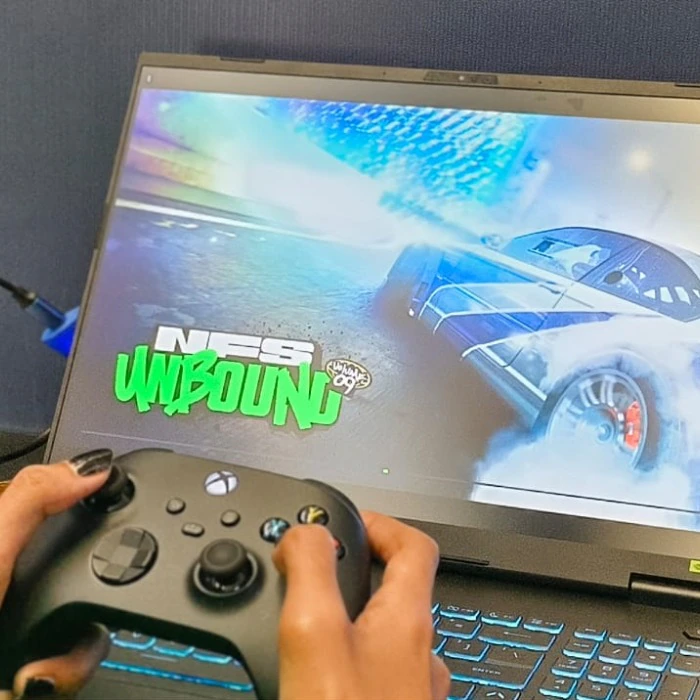
There’s a quiet but noticeable shift happening in India’s gaming culture. Not the kind you see in flashy announcements or big press releases, but something more subtle—almost like how people slowly stopped buying DVDs without really talking about it. Gaming, too, is at one of those crossroads where two worlds are starting to overlap: traditional console gaming and the rising wave of cloud gaming.
For most Indian gamers, consoles like PlayStation and Xbox have long been the dream setup. But lately, that dream is getting a new competitor that doesn’t even require expensive hardware. Just a decent internet connection and a screen.
The Comfort of Consoles and the Nostalgia Factor
Console gaming has always had a certain weight to it. You buy the machine, you own it, and it becomes part of your living room identity. There’s something satisfying about inserting a disc, holding a controller, and knowing the game is running directly from your hardware.
Related storyFrom Gamer to Guide: How Esports Coaching Is Quietly Becoming a Real Career Path in India
In India, consoles also carry a bit of emotional value. They’re often shared among friends, cousins, and siblings. Late-night FIFA matches, story-driven games played over weekends—it’s more than entertainment. It’s a social experience built over years.
But here’s the thing: consoles are expensive. Not just the device, but the games, subscriptions, and accessories. That cost barrier has always limited how widespread console gaming can become in India.
The Cloud Gaming Promise: No Hardware, No Limits?
Cloud gaming changes the equation in a pretty radical way. Instead of running games on your device, everything runs on remote servers and gets streamed to your screen in real time. In theory, it means you can play high-end games on a basic laptop or even a smartphone.
Related storyIndian Satta and Kalyan Result: Understanding the Online Interest and Its Risks
That idea alone is enough to shake up the industry.
Cloud gaming vs console gaming: India me kaunsa dominate karega? is becoming a real question now, not just a tech debate. Because India is a mobile-first market. People are already used to streaming movies, music, and even working from cloud platforms. Gaming is simply the next step in that pattern.
Internet Reality Check in India
But before declaring a winner, there’s a reality check that can’t be ignored. Cloud gaming depends heavily on stable, high-speed internet. And while India has made huge progress in connectivity, the experience is still uneven.
In metro cities, fiber connections and 5G networks are making cloud gaming more practical than ever. But once you move into smaller towns or rural areas, the experience can get inconsistent. Lag, buffering, and latency issues can easily ruin a fast-paced gaming session.
Related storyWhen Games Start Writing Back: The Rise of AI-Driven Storytelling in Gaming
And in gaming, even a split-second delay can decide whether you win or lose. That’s not a small detail—it’s everything.
Accessibility vs Ownership Mindset
One of the biggest differences between these two models is ownership. Console gaming feels permanent. You buy a game, it’s yours. You build a collection over time.
Cloud gaming feels more like renting access. You’re paying for the experience, not the ownership. For younger gamers who are already used to subscription models like Netflix and Spotify, this might not feel strange at all. But for traditional gamers, it can feel a bit… temporary.
Still, convenience has a way of slowly changing habits. Nobody thought people would stop buying DVDs either, but here we are.
Where the Market Is Actually Heading
The interesting part is that this isn’t a winner-takes-all situation. India’s gaming market is too diverse for that. Console gaming will continue to grow in premium segments—enthusiasts, esports players, and dedicated gamers who want performance and reliability.
Cloud gaming, on the other hand, will likely expand faster in casual and mobile-first audiences. People who want quick access to AAA titles without spending heavily on hardware will find it attractive.
In many ways, both can exist side by side without fully replacing each other. It’s less of a battle and more of a split in audience behavior.
The Experience Gap Still Matters
Even with all the innovation, one thing consoles still do better is consistency. No dependency on server quality. No internet fluctuations. You turn it on, it works.
Cloud gaming is improving, but it still has a learning curve in terms of infrastructure. The experience can vary depending on location, network provider, and device compatibility. And in gaming, consistency matters more than almost anything else.
That said, the gap is narrowing every year. What felt impossible five years ago already feels usable today.
A Future That Feels Hybrid
If there’s one safe prediction, it’s that the future won’t be purely console or purely cloud. It’ll likely be a mix. Some players will stick to consoles for reliability and performance. Others will lean into cloud gaming for flexibility and affordability.
And many will probably use both without thinking too much about it—just switching depending on the situation, like choosing between streaming a movie or watching it in a theater.
Gaming in India is still in its expansion phase. More players, more platforms, more experimentation. And in that kind of environment, flexibility usually wins over rigidity.
So instead of asking who dominates, the better question might be: how will both evolve together as India’s gaming culture grows?