For many homeowners, choosing a water treatment system comes down to more than simply wanting cleaner water. There may be concerns about salt, chemical use, water waste, hard-water minerals, unpleasant taste, or contaminants that a basic filter doesn’t address.
That’s why whole-home treatment has become an interesting option for people who want a more comprehensive approach. But before choosing a system, it helps to understand exactly what the technology does, what it doesn’t do, and how it fits into everyday household water use.
What Makes Reverse Osmosis Different?
Reverse osmosis, commonly called RO, uses a semipermeable membrane to reduce many dissolved substances from water. Instead of simply trapping larger particles, the membrane provides a much finer level of separation.
Related storyWhy the Water in Your Glass Deserves More Attention
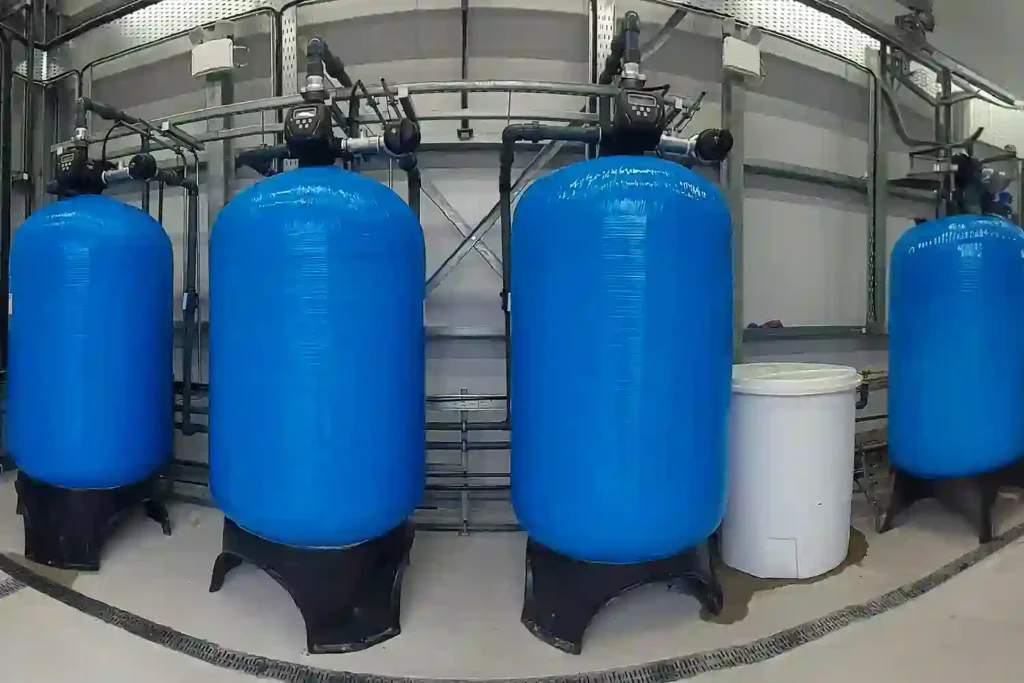
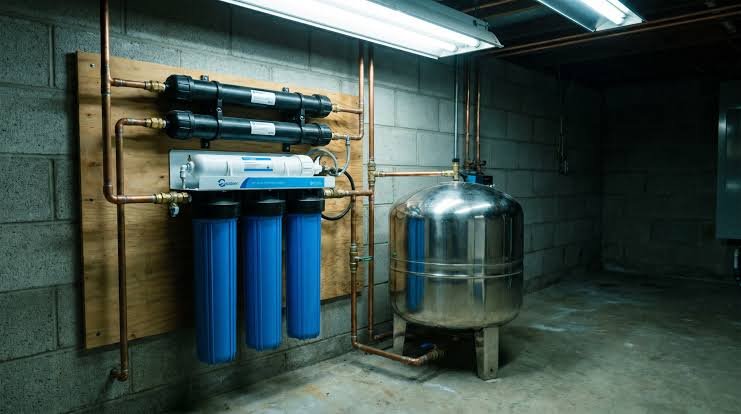
RO has traditionally been used as a point-of-use treatment, particularly for drinking and cooking water. A whole home reverse osmosis system takes the concept further by treating a much larger portion of the home’s water supply.
That can be useful when the concern isn’t limited to one kitchen tap.
Why Some Homeowners Prefer Salt-Free Treatment
Traditional water softeners commonly use an ion-exchange process involving salt. They can be highly effective for reducing hardness minerals, but some homeowners would rather avoid salt-based treatment for environmental, maintenance or lifestyle reasons.
There are alternative treatment approaches that operate without the use of salt or chemicals, depending on the water-quality problem being addressed.
However, it’s important to understand the terminology. A salt-free conditioner doesn’t necessarily remove calcium and magnesium in the same way a conventional softener does. Some technologies focus on managing the way scale forms rather than actually reducing water hardness.
That distinction should be clear before installation.
What About Chemical-Free Water Treatment?
The idea of avoiding chemicals can be appealing, particularly for households trying to simplify their treatment setup.
Related storyWhen Hard Water Becomes a Daily Problem, the Right Solution Matters
Technologies such as membrane filtration and certain physical filtration methods can reduce specific substances without chemical dosing. UV disinfection is another example of a treatment approach that uses light rather than adding a disinfectant to the water.
Still, “chemical-free” shouldn’t be interpreted as meaning every contaminant disappears automatically. Different technologies have different capabilities.
The smart move is to identify the contaminant first and then select equipment that has documented performance for it.
Related storyWhy Hard Water Leaves More Than Just Spots Behind
The Question of Wasted Water
Water efficiency is an important consideration with reverse osmosis.
Traditional RO systems can send some water to drain during the filtration process. The exact amount varies considerably by system design, incoming water pressure, membrane condition and other factors.
If you’re concerned about wasted water, compare systems based on their actual recovery or efficiency specifications rather than assuming every RO system operates in the same way.
Modern designs can be considerably more efficient than older equipment, so it’s worth looking closely at the numbers before making a purchase.
Related storyHow Better Water Management Supports Safer, More Efficient Industrial Operations
Is Whole-Home RO Right for Everyone?
Not necessarily.
Whole-home reverse osmosis can provide extensive treatment, but it also tends to involve more equipment, greater installation complexity and potentially higher operating costs than a point-of-use system.
If your only concern is drinking-water taste or a specific dissolved contaminant at the kitchen tap, a dedicated drinking-water RO system may be enough.
Whole-home treatment becomes more compelling when the goal is to address water quality throughout the property or when several household uses depend on treated water.
Related storyWhat Homeowners Should Know Before Starting a Professional System Installation Project
Think About Plumbing and Flow Rate
Treating water for an entire house is very different from treating a few gallons for drinking.
A whole-home system needs to handle periods of high demand. Showers, washing machines, dishwashers and multiple faucets can all operate at the same time.
That means flow rate and system capacity are important. An undersized system can create frustrating pressure or availability problems.
Professional sizing can help ensure the equipment matches the household rather than simply being installed because it has a particular capacity listed on the box.
What Happens to Minerals?
Reverse osmosis can reduce many dissolved minerals along with other substances.
Some homeowners appreciate this. Others prefer to add selected minerals back into treated drinking water through a remineralization stage.
For whole-home applications, the desired mineral balance may also influence how the system is configured. This is another reason water testing and professional assessment are valuable.
You want the final water to be appropriate for how you’re planning to use it.
Maintenance Still Matters
Even a highly automated system isn’t completely maintenance-free.
RO membranes eventually need replacement. Pre-filters may require regular changes, and pumps, valves or storage components can also require attention depending on the system design.
Before buying, ask about filter life, membrane replacement costs, servicing and the availability of replacement parts.
The cheapest system isn’t necessarily the most economical if its maintenance costs are high.
Start With a Water Test
Perhaps the most useful advice is also the least complicated: test your water before choosing treatment.
A water analysis can help identify hardness, dissolved minerals, metals, microorganisms and other characteristics that influence treatment decisions.
Once you know what’s actually present, you can determine whether whole-home RO is justified or whether a simpler system would accomplish the same goal.
That can save money and prevent unnecessary treatment.
A More Thoughtful Way to Treat Household Water
The appeal of whole-home reverse osmosis is understandable. It offers a comprehensive approach for households looking to address water-quality concerns throughout the property rather than relying solely on a kitchen filter.
But good water treatment isn’t about choosing the most advanced system available. It’s about finding the right balance between performance, water use, maintenance, cost and household needs.
If avoiding salt and chemical dosing is important to you, investigate suitable alternatives carefully. If water conservation matters, compare RO efficiency figures. And if you’re considering whole-home treatment, make sure the system is properly sized for your property.
With good testing and realistic expectations, water treatment can become less of a guessing game—and much more of a practical, long-term investment in your home.